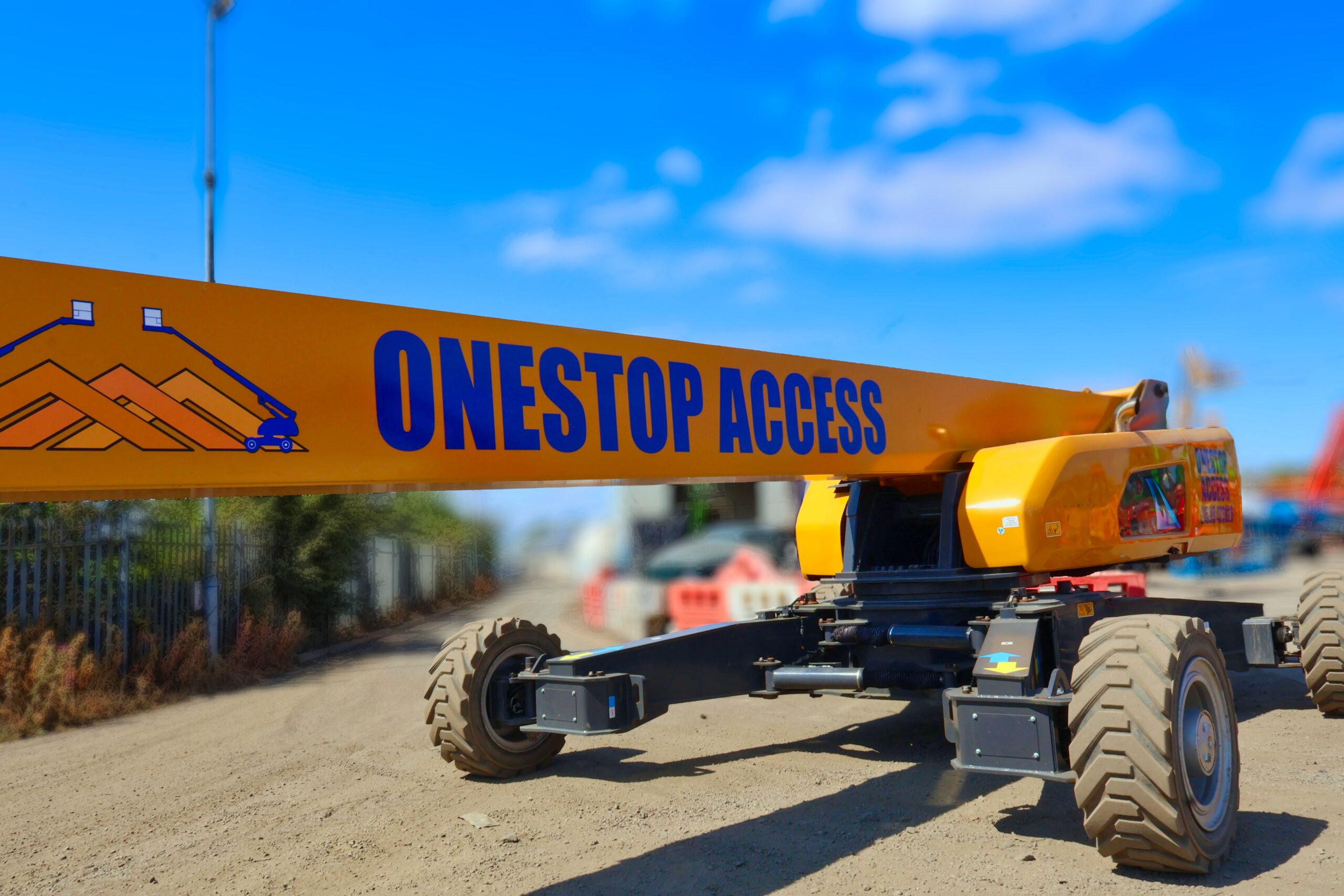
Whether you are carrying out vital maintenance on a historic Edinburgh facade or erecting steelwork on a rugged Highland construction site, having the right access equipment is the difference between a project running smoothly and facing costly delays. When it comes to reaching high, difficult-to-access areas, a boom lift—often referred to as a cherry picker—is usually the best tool for the job.
But with dozens of models, varying power types, and drastically different capabilities, how do you choose the right one?
Selecting the wrong machine can lead to access failures, damaged ground surfaces, or compromised site safety. At One Stop Access (Scotland) Ltd, we supply top-tier powered access equipment across the country. To help you make an informed decision, we have put together this essential guide on choosing the perfect boom lift for your next project.
1. Articulating vs. Telescopic: Choosing the Right Arm
The first and most crucial decision you will make is selecting the type of boom lift. Booms are generally split into two main categories, each designed to solve different access problems.
| Feature | Articulating Boom Lifts (Z-Booms) | Telescopic Boom Lifts (Stick Booms) |
| How it Moves | Features multiple hinged sections (joints) that allow the arm to bend. | Features a straight arm that extends outward and upward like a telescope. |
| Best Used For | Reaching “up and over” obstacles like machinery, rooflines, or pipework. | Achieving maximum vertical height and horizontal outreach. |
| Space Required | Excellent for confined spaces and tight, complex work areas. | Requires more space to maneuver and extend fully. |
If your team needs to navigate around complex architecture or work over the top of existing structures, an articulating boom is your best bet. If you have clear, unobstructed space and simply need to push your team as high and as far out as possible, a telescopic boom is the superior choice.
2. Powering Your Lift: Indoor vs. Outdoor
Once you know the shape of the lift you need, you must consider its power source. The environment of your Scottish site—whether an enclosed warehouse in Glasgow or a muddy, rain-soaked outdoor site—will dictate this choice.
- Diesel-Powered Lifts: These are the workhorses of outdoor construction. Built for rough terrain, diesel lifts offer immense power, 4-wheel drive capabilities, and the torque needed to navigate steep gradients and deep mud. However, due to exhaust emissions and noise, they cannot be used indoors.
- Electric-Powered Lifts: Ideal for indoor facilities management, shopping centres, and warehousing. Electric booms run on large batteries, offering zero emissions and whisper-quiet operation. They are usually fitted with non-marking tyres to protect finished flooring.
- Hybrid / Bi-Energy Lifts: The ultimate all-rounders. These machines can run on diesel when travelling across rugged outdoor yards, and then switch to clean battery power once they transition inside a building. If your project spans both environments, a hybrid lift offers unmatched versatility.
3. Crucial Site Specifications to Check
Before confirming your hire, double-check these three critical metrics against your project’s demands:
Working Height vs. Platform Height
Always check the working height specification. Platform height refers to where the operator’s feet will be, while working height adds roughly two meters (6.5 feet) to account for the operator’s reach. Ensure the machine can comfortably reach your target without the operator needing to overstretch.
Horizontal Outreach
Reaching up is only half the battle. If you cannot park the machine directly underneath your work area—due to ground trenches, fragile landscaping, or water features—you need to calculate exactly how far out the boom needs to stretch.
Platform Capacity (SWL)
Every boom lift has a Safe Working Load (SWL). Calculate the combined weight of your operators, their heavy winter PPE, and all the tools and materials they need to lift. Overloading a basket is a severe safety violation and will trigger the machine’s safety sensors, shutting it down.
Get Expert Advice from One Stop Access (Scotland) Ltd
Choosing the right boom lift involves balancing height, reach, terrain, and power. Getting it right ensures maximum productivity; getting it wrong can bring your site to a standstill.
You do not have to make the decision alone. At One Stop Access (Scotland) Ltd, our experienced hire desk team is always ready to discuss your specific project requirements. We can conduct site surveys, advise on the best machinery for the challenging Scottish elements, and ensure your operators have the right IPAF training to get the job done safely.
Ready to elevate your next project? Browse our extensive fleet online or contact our team today to find the perfect boom lift for your site.