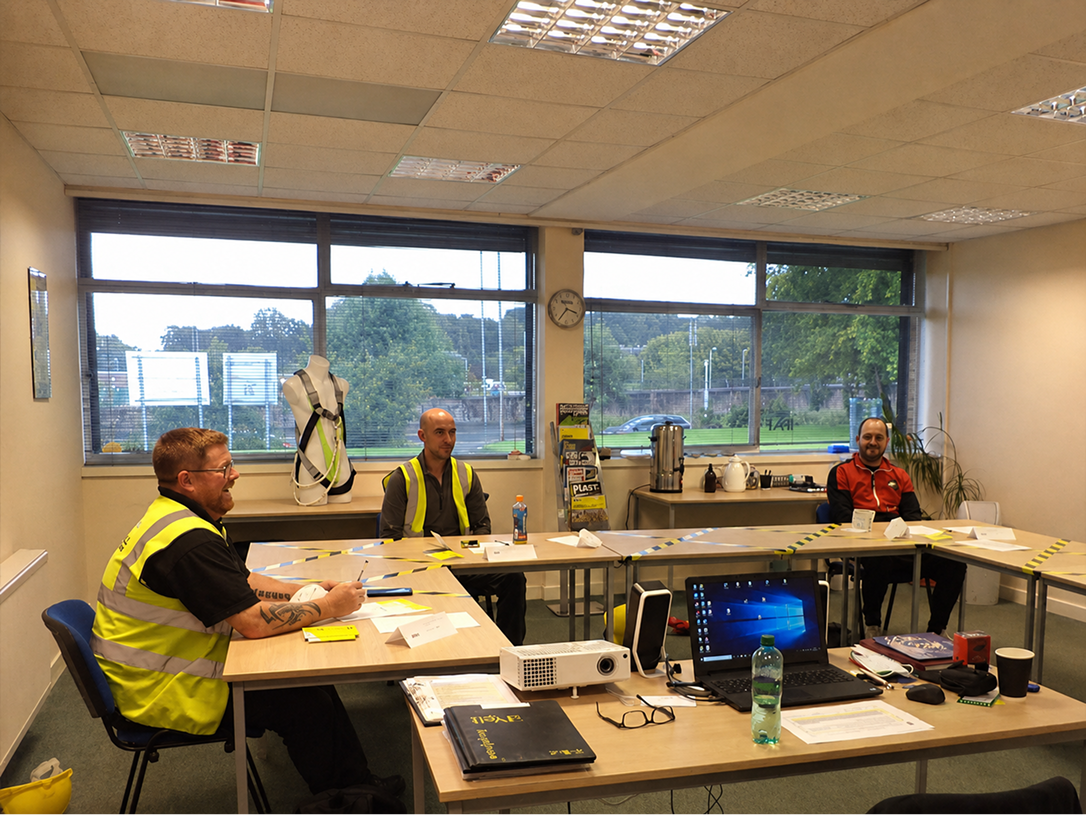
Ladders and stepladders are some of the most common pieces of equipment found on construction sites, in warehouses, and across facility management operations. Because they are so ubiquitous, it is easy to assume that anyone can use them safely. However, statistics from the Health and Safety Executive (HSE) paint a very different picture: falls from height remain one of the leading causes of workplace fatalities and major injuries in the UK.
Using a ladder safely requires more than just common sense; it requires proven competence. Under the Work at Height Regulations 2005, employers have a strict legal duty to ensure that anyone working at height is fully trained and competent to do so.
This is where the Ladder Association comes in. As the leading industry body for ladder safety, their accredited courses provide the gold standard for compliance. At One Stop Access (Scotland) Ltd, we understand the commercial and safety pressures faced by site managers. Here is everything you need to know about obtaining Ladder Association certification for your workforce.
What is the Ladder Association?
The Ladder Association is the recognized voice of the industry, working closely with the HSE and other major safety bodies to promote the highest standards of safety and competence. They set the national training standards for the safe use, inspection, and management of ladders and stepladders. When your team completes a Ladder Association accredited course, you are investing in a universally recognized qualification that proves your commitment to on-site safety and regulatory compliance.
Why Do You Need the Certification?
If your team is working on commercial sites across Scotland, whether repairing a roof in Aberdeen or conducting retail refits in Edinburgh, you need to prove they are safe to be there.
- Legal Compliance: The Work at Height Regulations dictate that equipment should only be used by competent persons. Without formal training, proving competence after an accident is incredibly difficult.
- Site Access: Most principal contractors and large facility managers will not allow operatives on-site without proof of formal work-at-height training.
- Equipment Longevity: Training does not just cover how to climb; it covers how to correctly store, handle, and transport ladders, reducing costly damage to your inventory.
Which Course Does Your Team Need?
The Ladder Association offers several distinct courses tailored to different roles within your organization. Choosing the right one ensures you aren’t paying for unnecessary training while keeping your operations fully compliant.
1. Ladders & Stepladders for Users (Half Day)
This is the core course for anyone who uses ladders as part of their daily work. It covers the safe use of leaning ladders and stepladders, understanding the law, pre-use checks, and hazard awareness. If your team is regularly stepping off the ground, they need this course.
2. Ladders & Stepladders Inspection (Half Day)
Ladders must be formally inspected on a regular basis, and these inspections must be recorded. This course is specifically designed for supervisors or health and safety officers responsible for examining ladders, identifying safety-critical faults, and managing asset records. (Note: Delegates must pass the User course before taking the Inspection course).
3. Combined User & Inspection (Full Day)
For maximum efficiency, this full-day course combines both the User and Inspection syllabuses. It is the most cost-effective way to create highly competent operatives who can both use the equipment safely and legally sign off on its condition.
4. Ladders & Stepladders for Managers
If you oversee a team but do not climb ladders yourself, this course is vital. It focuses on the planning, organizing, and selecting of correct equipment, ensuring managers understand their specific legal responsibilities when directing work at height.
The LadderCard: Proof of Competence
Upon successful completion of any Ladder Association course, delegates receive a Certificate of Competence and a photo ID LadderCard. Valid for five years, this card explicitly states the level of training the holder has achieved (e.g., User or Inspector) and the categories of equipment they are qualified to use. It is the ultimate, universally accepted proof of competence that site managers look for during inductions.
Train with One Stop Access (Scotland) Ltd
Managing a busy team is challenging enough without having to navigate confusing safety legislation. At One Stop Access (Scotland) Ltd, we make achieving compliance simple, practical, and highly relevant to the environments you work in.
Our accredited training ensures your team leaves with the practical skills needed to assess risks, identify faulty equipment, and work safely at height. By investing in Ladder Association certification, you protect your workforce, satisfy your legal requirements, and keep your projects running without interruption.
Ready to secure your team’s safety and compliance? Contact us today to book your next Ladder Association training course.